



- Funding in women’s health continues to expand the share going to biopharma, devices, and diagnostics, creating new opportunities for investment and innovation.
- The women’s health sector now addresses the full spectrum of health needs, from mental health and fertility to cardiology and neurology.
- The advances and innovations emerging in women’s health today are demonstrating how integrated, tech-enabled models can work for the rest of the healthcare industry.
Women’s health has emerged as one of the most dynamic and innovative sectors in healthcare. As we’ve tracked this space for years, we’ve seen how startups are reimagining the ways in which healthcare is accessed, paid for and delivered. From AI and care planning to access and business models, the women’s health sector is showing us what the future of healthcare could look like for everyone.
The fact that these changes are emerging from a relatively new space isn’t a coincidence. For years, patients have asked the established healthcare system for these changes, to no real effect. By operating largely outside of traditional fee-for-service (FFS) and healthcare models, women’s health startups can be more agile, more responsive to consumer demand and better able to harness the latest technologies. The result is a system of care striving to be more integrated, focusing on the whole person rather than treating individual diseases or bodily systems. It’s a system rooted in models of preventive medicine that aim to keep patients healthy and detect disease as quickly as possible, rather than FFS treatments in a defensive medicine model.
That shift isn’t easy. Preventive healthcare requires regular access to a healthcare provider and the ability to reliably monitor a person’s well-being. Unfortunately, access to healthcare remains a systemic problem in the United States. According to GoodRX, about 81% of US counties — roughly 125 million Americans — lack adequate access to either pharmacies, primary care or community health centers. For women, the gaps are wider: 36% of counties lack obstetric care, and 28% have no mammogram access, according to the Milken Institute. Virtual care helps address these gaps, but clinicians and women’s health startups are using other technologies — especially AI — to close healthcare access disparities and reach underserved populations.
Women’s health is a broad care ecosystem
Over the last five years, the definition of women’s health has expanded beyond fertility and reproductive health. This evolution was essential — McKinsey reports that less than 5% of the overall female health burden stems from reproductive and sexual health issues. Today, women’s health is a robust, venture-backed healthcare ecosystem that includes biopharma, healthtech, diagnostics and tools (dx/tools), and medical devices.
Women’s health investment trends and market dynamics
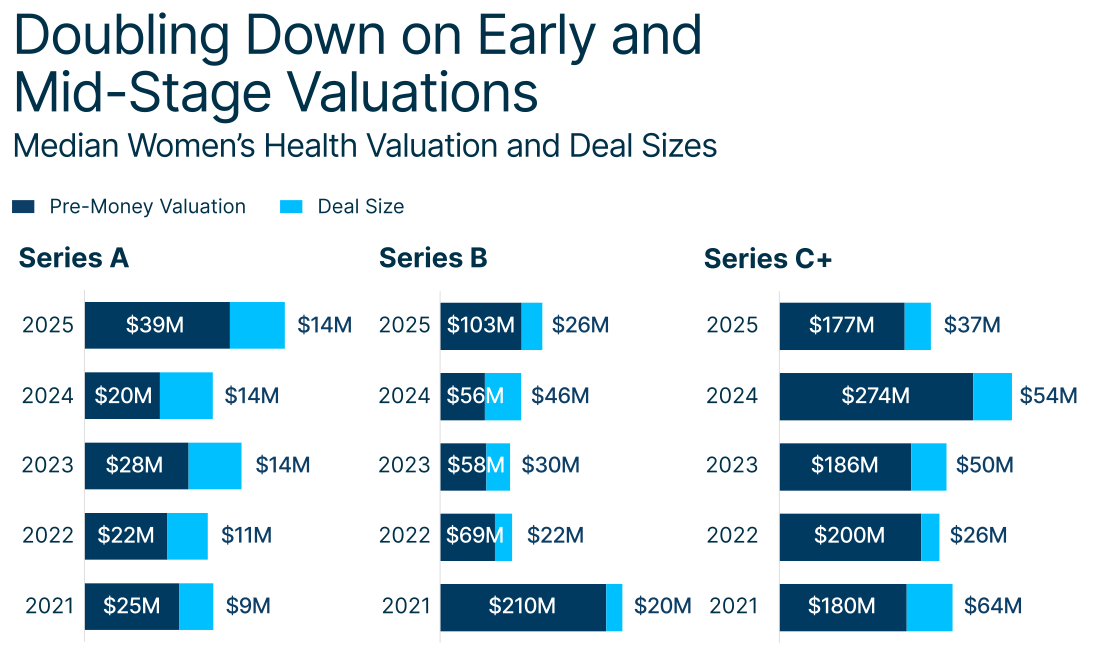
After a spike in 2024, women’s health funding followed the broader healthcare investment trends downward, ending at $1.58B in 2025, closer to 2021 and 2023 totals. As the number of deals and total capital invested declined the deals didn’t get much bigger. In early- and mid-stage rounds, median deal size has stayed relatively stable since 2021. What changed most drastically was the median valuations. For early-stage startups, 2025 brought the largest median valuations we’ve seen in the sector since we began tracking it in 2019. That rise is not surprising, as biopharma continues to make up a growing share of the women’s health market.
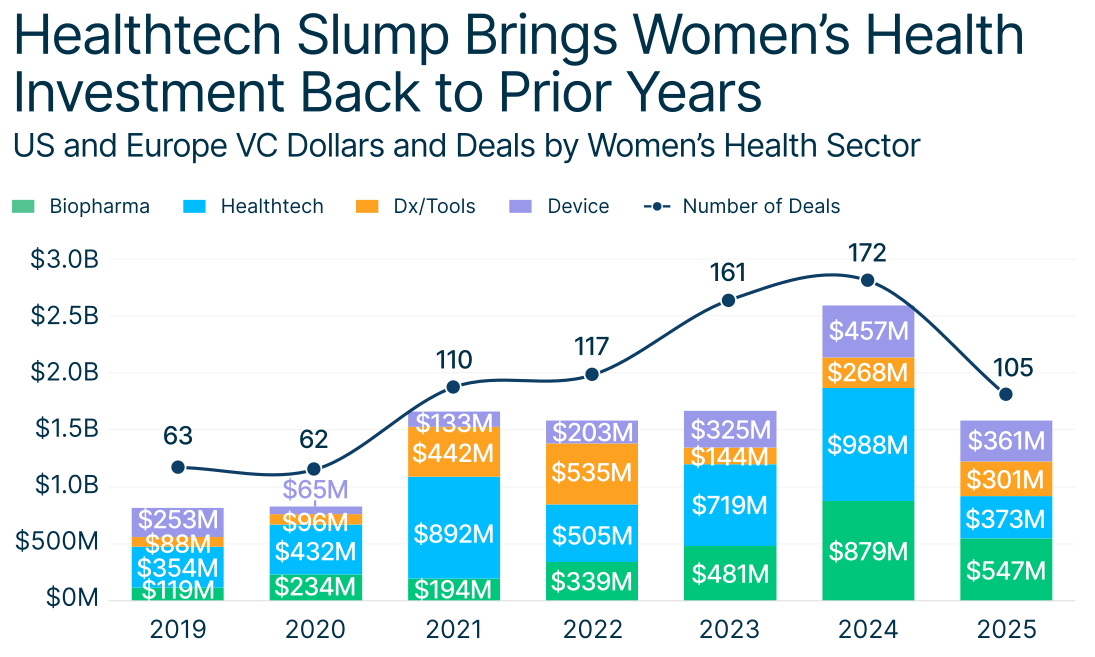
In prior years, healthtech — specifically alternative care — dominated women’s health investment. But in 2025, healthtech spending dropped significantly. The only healthtech mega-round of the year went to the AI-driven health chatbot Naari. Instead, oncology companies in biopharma and devices (companies like Callio Therapeutics, Iambic and Lumicell, which are focused primarily on breast cancers) became the biggest drivers of investment. That trend has already begun to shift again this year. As of March 2026, two healthtech deals (Midi Health and Pomelo Care) have raised more than 50% of 2025’s healthtech total and reached unicorn status.
Women’s health has a new scope
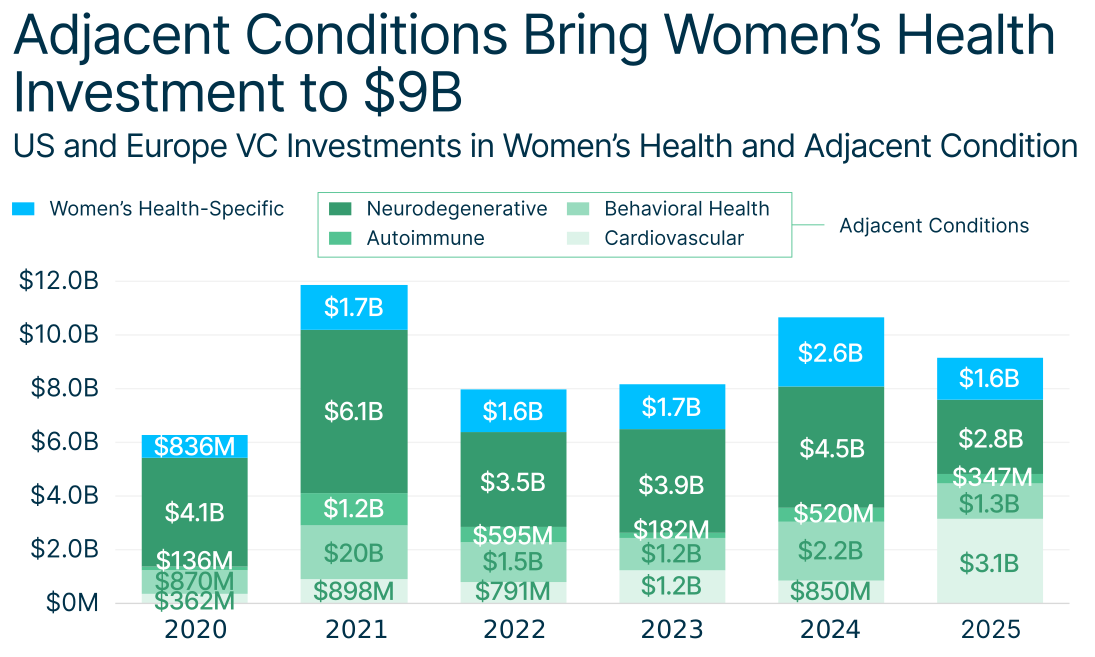
We are finally beginning to better understand the true scope of women’s healthcare needs. A focus on the diseases and conditions that affect women disproportionately or present differently in women than men reveals the real breadth of what should be considered women’s health investment. Behavioral health, musculoskeletal disorders, autoimmune diseases, and neurodegenerative conditions haven’t traditionally been considered women’s health.

Measuring disability-adjusted life years (DALYs) — the sum of years of life lost to early death and years lived with serious health issues — makes it clear that women bear the majority of the burden of these conditions.
| Disease or Condition Group | Relative Difference in DALYs Bourne by Women |
| Mental and Behavioral Health | +34% |
| Musculoskeletal Disorders | +36% |
| Neurological | +62% |
Startups are now tailoring drugs, protocols and products to women’s unique presentations, needs and preferences. Investors focused on women’s health are looking for companies outside of traditional definitions, and some are discovering they’ve backed women’s health companies without realizing it.
Other innovative women’s health sectors are also starting to understand how important women are to their business and are tailoring products to their needs. Oura — usually considered a general health wearable — has been moving aggressively further into the women’s health space to better serve more than 60% of its users. Since 2024, Oura has partnered with multiple women’s health companies, including virtual clinical provider Maven Clinic, fertility care company Progyny and at-home hormonal testing company Mira. In 2024, Hinge Health began promoting menopause and perimenopause support as part of its growing women’s health physical therapy portfolio, partnering with women’s health clinic Midi Health.
Exits aren’t hard to find when you know where to look
The overall exit market for startups has suffered in recent years, and life science and healthcare have not bucked the trend. M&A deals have slowed across the board as potential buyers balked at inflated valuations. While there are signs that the IPO market is recovering — with some successful high-profile IPOs from Hinge Health and BillionToOne, — funds have struggled to convert investments back into liquidity, slowing the reinvestment feedback loop that venture capital relies on.
Women’s health has drawn criticism for a lack of exits, with investors wondering whether the sector is simply facing the same market headwinds as the rest of the innovation ecosystem or if there are serious structural issues holding them back. There has been some acquisition activity in the space, but unicorns like Maven Clinic, Flo and Bellabeat show no immediate interest in an IPO or exit. As the definition of women’s health expands, the set of comparable exits grows. The successful IPOs of Hinge Health and BillionToOne show that companies that include women’s health in their portfolio or focus on conditions that disproportionately affect women can achieve blockbuster exits.
Private equity is also playing a larger role in the exit market. The pending acquisition of Hologic by Blackstone and TPG offers insight into how the market values women’s health. Hologic, while not explicitly a women’s health company, features diagnostics and devices fundamental to women’s healthcare. In fact, the deal includes about $700 million in contingent payments tied to the revenue of the Hologic breast health business. The deal signals a vision of women’s health diagnostics and imaging as a core component of healthcare strategy, one with recurring, protected revenue, strong margins and room for operational improvement. Not coincidentally, these technologies also produce immense proprietary datasets with a value that’s only increasing.
Women’s health is an intersection of transformative movements
Women’s health sits at the crossroads of several transformative healthcare innovation trends: integrated care, precision medicine, shared decision-making and new revenue models. These shifts have been moving from the periphery of healthcare toward the mainstream for years but have yet to gain broad traction in traditional care settings.
Patients and consumers today are looking for more convenience, more accessibility and more personalized care. They’re increasingly demanding providers who understand and address their specific concerns and needs. Women — who have endured a lifetime with a healthcare system that discounts their concerns, routinely misdiagnoses their conditions, and treats male biology as the default — are leading this charge. Startups like Visana Health are delivering integrated whole-body care tailored to women’s needs and conditions, combining testing, primary and specialty care, and longitudinal coaching.
From midlife care to longevity: The new care models
Personalized, multisystem care for menopause and perimenopause is improving both immediate and long-term health outcomes. Studies have shown such care helps women preserve muscle mass and bone density in midlife; helps prevent cognitive and sensory decline; and delivers statistically significant improvements in reported quality of life, memory and attention.
Midi Health, which raised $150 million across two rounds in 2025, is an example of this approach. Without changing its target demographic — women in midlife — it started offering care for metabolic diseases, obesity, and broader hormonal health, with a stronger focus on preventive healthcare. It began tracking its impact on a variety of clinical metrics and marketing its clinical and financial ROI to payers and employers. Essentially, Midi adopted a broad, longitudinal care model focused on the breadth of a patient’s needs, not just a single condition.
Similar transitions have been a struggle in the traditional healthcare system, where the shift from FFS reimbursement to value-based contracts has been going on for decades. Even alternative and virtual care startups have bowed to the necessities of billing. Women’s health companies are showing the rest of the healthcare industry how to build integrated care models aligned with the long-term health focus that value-based payments encourage.
AI-powered diagnostics: Closing the gap in women’s health detection
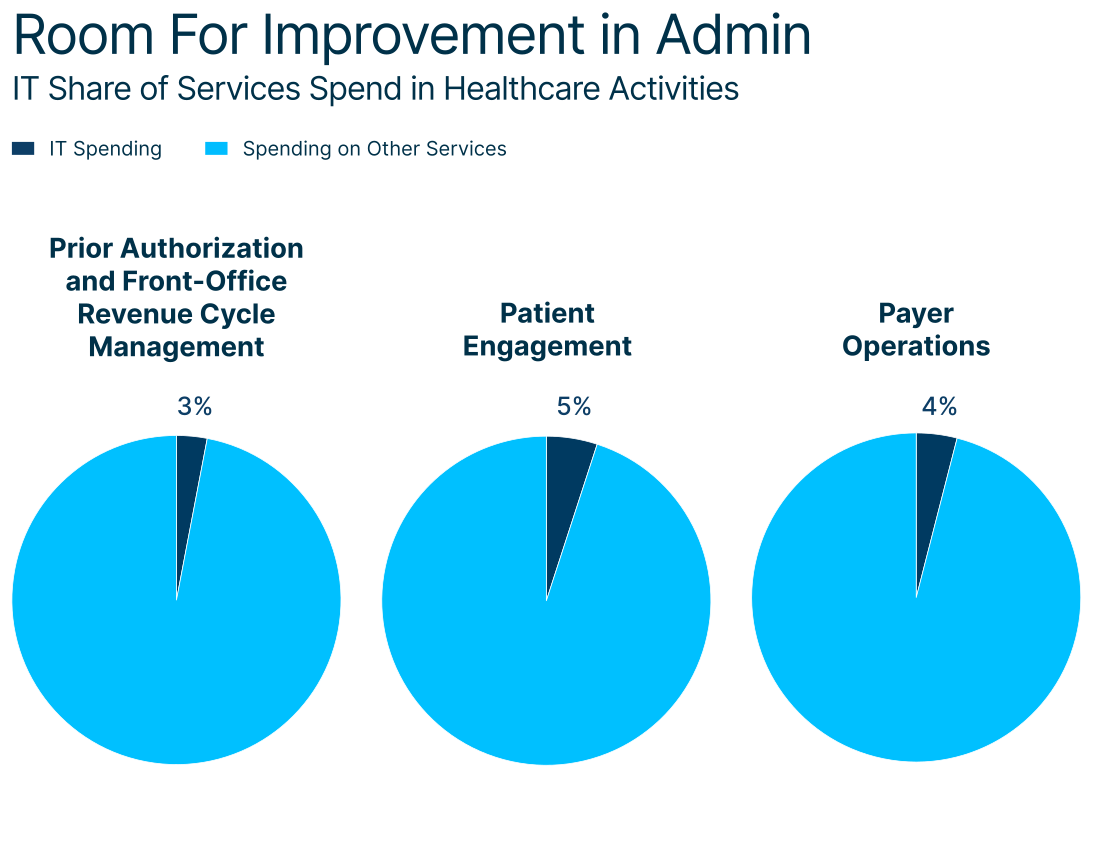
Health systems and payers are finding that integrated preventive care is essential to reducing costs and improving outcomes. To get the best results, however, a system needs to address more than just clinical practice but also technology and administrative processes. IT and technology spending in healthcare administration is a tiny fraction of overall spend. Cumbersome front-office activities like prior authorization and billing can discourage patients from seeking or continuing with care. Patient engagement tools are essential to monitoring patients and keeping them on track with care plans and medication regimens outside the clinic. New tech, especially AI, is helping bring massive improvements in these areas, which remain highly manual across most of healthcare.
While the clinical use of AI still faces well-founded skepticism, AI and machine learning tools excel at risk assessment and prediction. In women’s health, they can give providers specialist-level insights into rare conditions; rebalance historical inequities and poor performance in the diagnosis and treatment of unique, disproportionate or differently presenting conditions; and inform more personalized care. Integrating AI review into mammograms and Pap smears can improve early detection and provide an intermediary level of review between screening and a follow-up MRI, for example. For patients with time, cost or access constraints, reducing the burden of review and follow-up can help close major care gaps that result in undertreatment or no treatment at all.
Adding AI to screening and patient evaluations can also integrate lifestyle factors and social determinants of health into the process of diagnosis. It can account for factors that may be unknown or not apparent to a clinician, such as female-specific indications or risk factors like obstetric history, exposure to hormone therapies or breast density. In some cases, AI can flag potential risks that are otherwise hidden in patient comments or outwardly disconnected symptoms. Although routine osteoporosis screenings aren’t recommended until age 65, the average age at which patients self-report symptoms is 46.9. Early risk factor characterization and quicker interventions improve outcomes and help reduce functional decline
AI is only as good as the data it’s trained on, and unfortunately population-level healthcare data has some serious flaws. Patient data reflects the same misdiagnoses and screening gaps AI is meant to solve. But research data is highly flawed too. Consider clinical trial datasets. Women have been historically underrepresented or excluded, even in trials for conditions where they are the majority of patients or where sex-based differences in presentation are well understood.
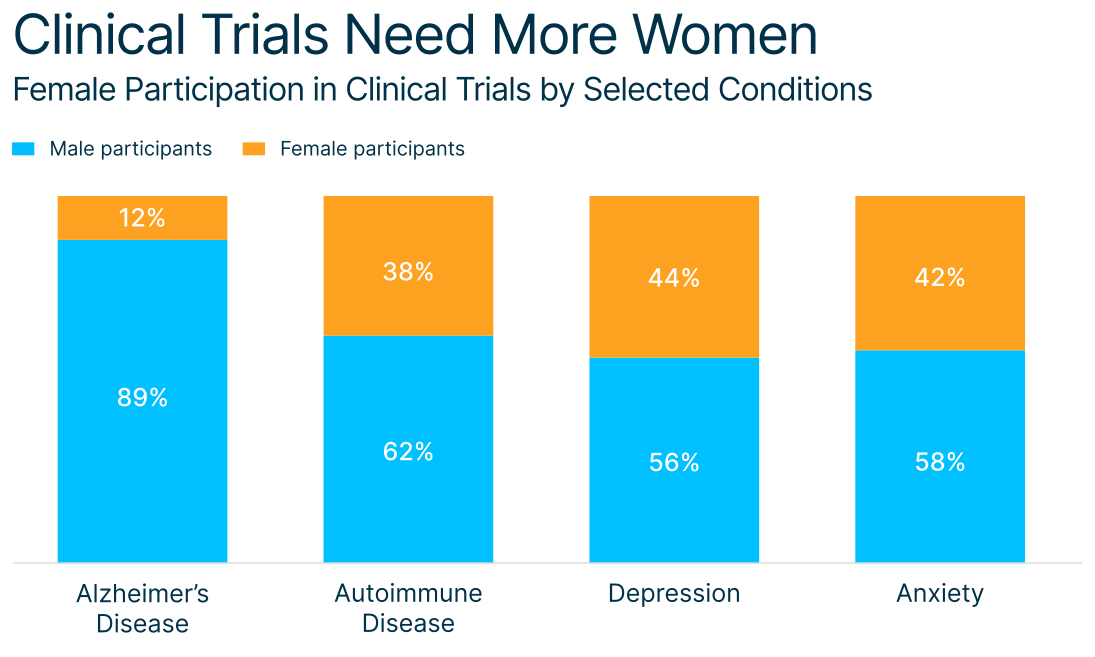
The lack of female participation in clinical trials causes problems across the board. It’s led to treatment and dosing protocols that don’t reflect female biology or adequately account for women’s needs. Clinical trials are one of the only ways to access cutting-edge experimental care. And lack of access to sufficient patient populations can be one of the biggest barriers to research. The shortage of large, diverse datasets and relevant variables is frequently cited as a limitation in research papers. Most US datasets are small and don’t include broad demographic representation. The consequences are serious, creating, for example substantial gaps in understanding conditions like endometriosis or a reluctance to treat pregnant women and obstetric conditions.
The road ahead: From proving ground to industry standard
The best way to understand women’s health is as a proving ground for healthcare innovation. As the sector grows, so will its influence on the broader healthcare ecosystem. The companies, technologies and solutions that succeed and prosper are models for the best ways to bring new solutions to patients. The winners will be startups that make care easier to access, more convenient to use and more responsive to patient needs. So far, 2026 is shaping up to be one of the biggest years for women’s health investment on record. There have never been more companies working on conditions that impact women, whether they call themselves women’s health companies or not. That momentum, and the growing understanding of not just the importance of women’s health, but also the immense value it brings, is something the entire healthcare industry should be grateful for. As we continue to cover women’s health innovation (look for our annual report coming this summer) we can’t wait to see what the future brings.